
A Guardian and a Thief, by Megha Majumdar
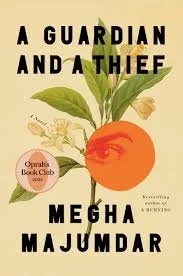
Majumdar sets her story in a near future time when climate change is creating chaos in flooding coastal areas of the world, leading to a United States program of granting climate change visas to carefully vetted immigrants. Terrorism is still a grave concern, so the U.S. is extremely careful about who may enter the country, in spite of their desperation. The story is set in Kolkata, India. Kolkata sits on the Hooghly River, on reclaimed wetlands near the Bay of Bengal, about 47 miles west of the border with Bangladesh. In this near future time, water levels are rising, extensively flooding rural and urban areas where the poor live, and increasingly, the middle class as well. We see examples of social breakdown, home invasions, theft, scams, and the police turn a blind eye to most all but the most violent of crimes. The survivability of these conditions is increasingly precarious, with only the wealthiest able to avoid the consequences, while everyone else is at the mercy of immigration policies, their wits, sheer luck, and as distress grows, violence.
We meet two families, of different social and economic position. Ma, mother of two-year old daughter Mishti, and Ma’s aged father, Dadu, are one week away from escaping this disintegrating situation, waiting for their climate visas and flight to Ann Arbor, Michigan, to rejoin Ma’s husband. He is in an academic position, has established a home for the family, ahead of their arrival. This family is obviously middle class, well-educated, their home with air conditioning, reliable power, modern conveniences, clean water. Kolkata is a city of great opposites— a cultural and academic jewel of India, it also has great poverty, with a third of the population living as squatters, no utilities, makeshift homes from scraps. Ma’s home is showing signs of degradation, from the bars on the windows, to the remnants of a former garden, picked clean by the desperately hungry. In this time of increased heat, the native fish are gone, and native crops are burned by heat and flooded by the bay. Mishti doesn’t understand how Ma and Dadu are scrambling to provide food, going without to make sure Mishti is fed, and won’t remember this time of deprivation.
Boomba, a young man who came to Kolkata seeking to make money and relocate his family to a real and secure home, to escape their precariously poor rural life. Living in a shanty, his parents try to make enough money to survive, his younger brother Robi, of similar age to Mishti, growing up with very little, the family barely surviving. They are on the leading edge of the impacts of climate change, with no hope or knowledge of how to adapt or improve their circumstances. Boomba is determined to give his family security, but his naivety leads to some progress, followed by major setbacks. He is not much better in Kolkata than they are in the countryside. His determination hasn’t wavered, and if he cannot obtain security through employment, he will do so by theft.
With the pressure of the ticking clock, one week until the wealthier family’s flight, circumstances intervene repeatedly, with each family fighting for survival and security. We see them go from negotiation and a battle of the wits, until the final violent breakdown of social order. For the reckless pursuit of survival and security are the great levelers, the equalizers. What we choose to do in the face of desperation, finally doesn’t care about educational background or social status. The author weaves characters’ backgrounds, as well as the city’s history, into the story with subtle hints and brief moments. She creates a page turning pace, as we read to find out who escapes, and who survives.
While I am not convinced of the Al Gore version of climate change and its causes (I think there is a more complex set of circumstances at play, some man-made, some cyclical), there are obviously major changes occurring in highly populated areas of the world, that are likely to lead to chaos as populations become frenzied and distressed. This novel depicts one such scenario, the author using skillful plotting, prose, and character development to create this morality play. Recommended, good for book discussions.