
Son of Nobody, by Yann Martel
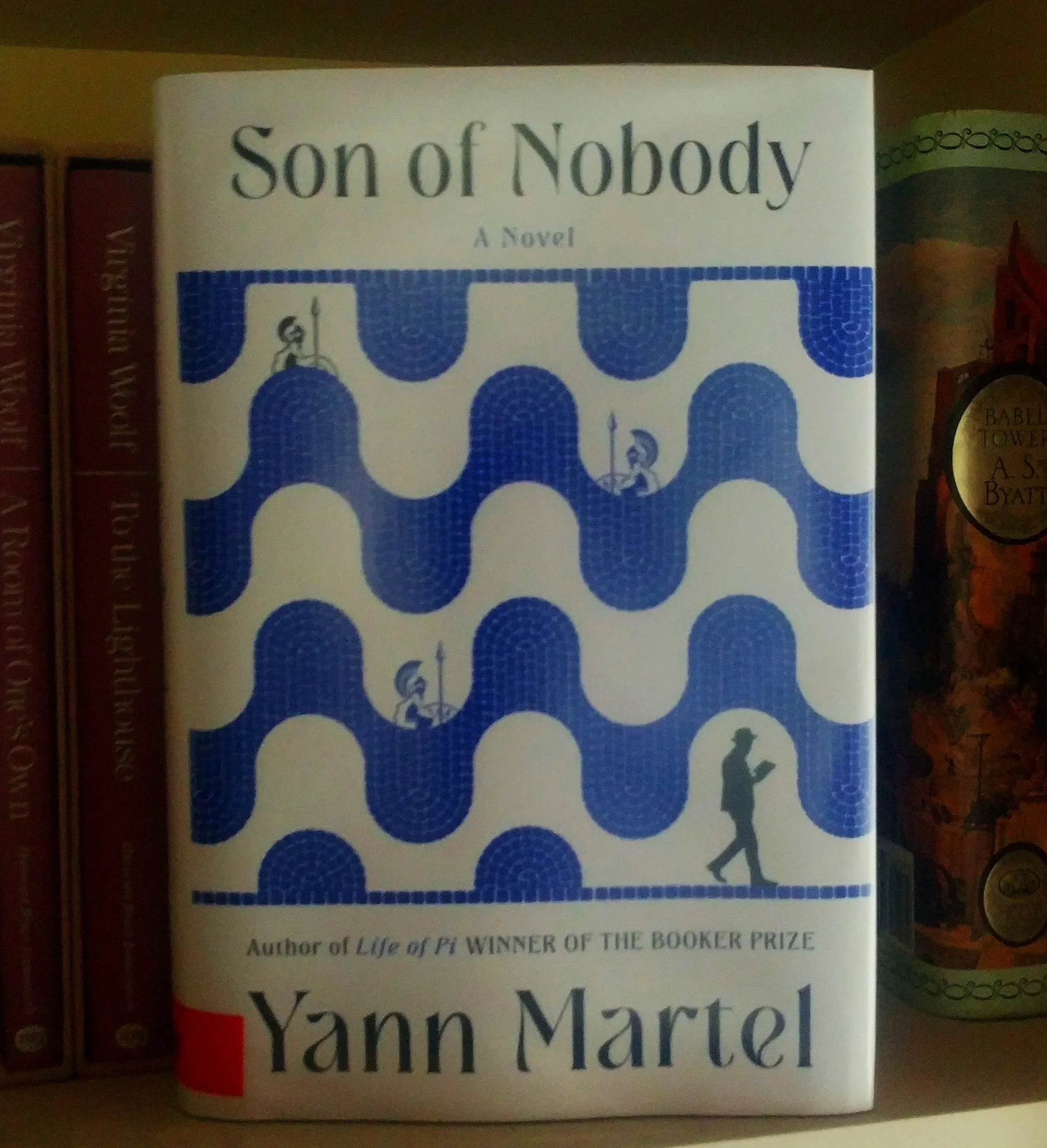
Harlow Donne is an instructor and PhD candidate at a small Canadian university when he is awarded a nine-month fellowship at Magdalen College, Oxford University in England. He is studying Classics, specifically the ancient epics of Homer. The fellowship gives him an opportunity to work with The Oxyrhynchus Papyri, thousands of shreds of papyrus that contain all manner of written material, translated and published in volumes, over time, based on ongoing painstaking detective and translator labor. Serendipitously, during a visit to the Classical Greek Collections at the Ashmolean Museum, Donne happens upon pottery shards that contain the words, “I AM HERE BECAUSE OF PSOAS OF MIDEA SON OF NOBODY.” This leads to what he is convinced is his discovery within the papyri of The Psoad, an epic of the Trojan War, telling the tale from a different perspective than Homer’s The Iliad, that of a commoner soldier’s experience.
Donne pays a significant price for this career ambition, however. His marriage with wife Gail is suffering, their disagreements frequent and increasingly intense, their positive relations few to none. Their only shared love is for their seven-year-old daughter, Helen, and they each have a strong positive relationship with her. So it is with sadness that Donne must leave Gail and Helen behind to fulfill this dream, not unlike the Greek soldiers who leave their homeland for ten years to pursue the king’s pleasure of conquering Troy, with hopes of treasure and valor.
Martel structures his story in a bifurcated way—a bold line divides each page into lower and upper halves. The upper halve contains Donne’s translation of The Psoad, while the lower half contains footnotes. These footnotes contain material to clarify the action of the epic, reflections on differences from The Iliad’s depiction of action, and Donne’s personal story, including flashbacks as well as what is currently happening, his sparse communications with his family. The reader starts to see parallels between Psoas and Donne, frustrations with superiors, insufficient support from home, anger and personal doubt. Each is trying to figure out why they are in this position, what choices led to this. Both stories give the reader a sense of impending tragedy.
In interviews, Martel says that The Iliad is largely a story of poor anger management, played out between King Agamemnon and Achilles, which has great relevance for today. Dysregulated anger is a theme that runs through both stories, Psoas and Donne, and it cannot lead to anything good. Martel’s references to Jesus of Nazareth are interesting—it tells me that unregulated anger is sinful, meaning it distances us from God, and that love and self-sacrifice are the answer. I wonder what Martel makes of that. Highly recommend this book for the thoughtful reader, as this is an easy story to follow, with many reasons to revisit and ponder.