
Hotshot: A Life on Fire, by River Selby
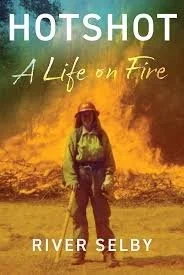
River Selby is her chosen name; she was born Anastasia, often called Ana during the timeframe of this memoir. Also at that time, she was bisexual and identified as a woman. I will refer to her with the pronouns she and her during this review. She presently self-refers as they/them, and nonbinary. That preference is not directly discussed in this memoir, so I will not make reference to that, nor will I express opinions on the issue of gender identification.
I picked up this memoir out of an interest in a woman’s experience of wildland fire fighting. I was aware of David Goggins’ experience as a smoke jumper (author of Can’t Hurt Me and Never Finished), a former Navy Seal and trained Army Ranger (https://www.margueritereads.com/home/cant-hurt-me-master-your-mind-and-defy-the-odds-by-david-goggins?rq=can%27t%20hurt%20me). Smoke jumpers are the most elite wildland firefighters, parachuting into fires, operating as independent teams. Learning about his traumatic childhood, and the incredible effort needed to achieve what he has in life, I was intrigued in learning a woman’s side of the story.
Hotshot describes Selby’s experience as a woman in a highly masculine, male-dominated environment, where she was often the only woman in a team that must work cohesively in unpredictable, dangerous conditions, following a military structure of discipline and accountability. She explains the nature of sexual harrassment in such as environment, where team members must communicate clearly, assess risk, and support one another, made additionally dangerous when sex becomes a factor. She is very frank about her self-scrutiny, always questioning whether she brought this treatment upon herself, or if some of the men attracted to this type of work bring their own baggage. Selby worked two years as a contract fire fighter, then four years as a hotshot, going with her team directly into wildfires for containment and extinguishment, and finally one year as a technician with a helicopter supply crew, supporting hotshot crews. Her time as a fire fighter took her from Florida, to California, Oregon, Colorado, Nebraska, Montana, Idaho, and finally, Alaska.
Covering that material would make an interesting memoir, but this book is so much more. Selby was raised by a single mother who appeared to have a personality disorder (armchair diagnosis— borderline) and alcoholism. When her mother married when Selby was twelve, they finally had financial stability, but still no psychological stability. Although Selby doesn’t go into the details, she alludes to rape, homelessness, drug and alcohol abuse, as well as a time as a stripper and sex worker. She turned to wildland fire fighting at age nineteen, and hotshot work in her early twenties. Selby’s relationship with her mother is doubtless a factor in her self-doubt, both regarding her identity and male relationships.
Much research was conducted for this memoir, as she weaves in background information on the U.S. history of fire suppression and management, corporate interests, indigenous methods and philosophy of fire management and working with natural resources, and European colonization practices of land management. Additionally, she provides some background into the biological and ecological factors of fire management, regarding various species of trees, underbrush, and their ecosystems, and current scientific research that should inform practice. That is quite a juggling act, to weave together research, personal themes, and her personal anecdotes. I would say that Selby achieves her end, although I suspect we will see future memoir from her that cover in greater depth various aspects of her complicated and complex life experiences.
So, come for the hotshot stories, and stay for a surprisingly multifaceted story of gender and mother-daughter relations, land management, colonization, unified by the motif of fire. Book discussion groups should enjoy this, with so much material for consideration.