
Kin, by Tayari Jones
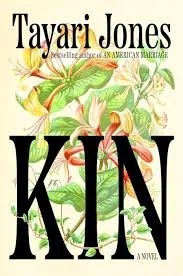
Having greatly enjoyed and appreciated the excellent story telling of her novel, An American Marriage (see my review here: https://www.margueritereads.com/home/2015/12/18/an-american-marriage-by-tayari-jones?rq=tayari) , I eagerly awaited her next book. At long last (seven years!) loyal readers are rewarded with Kin.
Jones displays her knowledge of both sides of the tracks, if you will, especially from the Black perspective. We follow the lives of Vernice and Annie, “cradle friends” growing up in small town Honeysuckle, Louisiana. Annie’s mother surrendered the newborn to her mother, and took off for Memphis, abandoning motherhood altogether. Vernice, or Niecy, loses her parents when her father shoots her mother, then kills himself. Her Aunt Irene, her mother’s sister, returns from Ohio to raise the baby. Sharecropping is in the recent past, and while the small Black community doesn’t have to contend with Jim Crow too directly, the poverty is shared by most, making going without a shared experience.
The two girls share the crippling loss of a motherly bond, the emotional support and love a mother provides. It is a loss the two girls understand deeply, yet find their own ways to compensate through their life choices. Jones writes with great emotional intelligence and sensitivity about this, a grief and lack that both young women will be forced to reconcile with in order to move forward in life.
Vernice pursues education as her road to freedom, opening the door to better choices and possibilities in her life. Meanwhile, Annie has a burning desire to find her mother, confront her for leaving her, trying desperately to understand why and how she could leave her. Annie is willing to take more menial jobs, pushing a mop or mixing and serving drinks, earning enough to get by. Her obsession with meeting her mother overrides any other life goal, in spite of warnings from everyone who cares about her to just move forward with her own life.
While Annie pursues life in Memphis, Vernice leaves Honeysuckle behind for Atlanta, and Spelman College, an historically Black women’s college. Through Nicey’s eyes we see the chasm she must cross, from small town poverty to the elite of Black society, the young women who will fight for Civil Rights, take the careers, and raise the next generation of children furthering the cream of Black society. Still suffering from the emotional hole of no motherly support, she finds her way to her version of a solution.
Jones demonstrates the importance of education for personal development, and the uplifting of a people. She depicts the crucial importance of reputation, societal respect, and self-respect, the power of a loving relationship, and its attendant responsibilities. A mother’s love is given primary importance, as is the strength of kinship, and what we will do for one another when in need. A powerful book, presenting interesting ideas in a singular way. Worth your time this summer, and good for group discussion.