
A Far-Flung Life, by M.L. Stedman
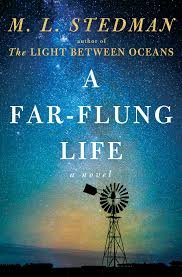
A novel of vast geographic scale, this story covers Western Australia (WA), known as the Outback, the third of a nation and continent, from roughly 1958 to the 2000’s, following the saga of the MacBride family, who own and operate Meredith Downs, a million-acre sheep station. A solid, respected, independent family, led by Phil and Lorna MacBride, and their three young adult children, Warren, Rose, and Matt. When tragedy strikes early in the book, remaining family members are forced to carry on with unspeakable grief. Further grief comes a year later, forcing Lorna and Matthew to carry heavy burdens of secrets, for the sake of Lorna’s new grandbaby, Andy.
Stedman ponders questions deeply in this novel—what should be absolutely private, not even shared between family, or spouses? Questions around memory and forgiveness—are some actions and accidents forgivable? Questions asked forever, such as the difference between justice and the law, and can the imperfections of the law at times, be set aside for what is best for the people involved? How much personal sacrifice is required of one for another we love, who depends on us? Andy names the concept of “forgetments”, the opposite of memories, those things we forget, cannot retrieve. This idea becomes a theme, repeating the importance, or irrelevance, of things we remember or forget.
Stedman presents Western Australia of the fifties and sixties in all its vastness, from the colors of the sky, to the pervasive red dust, the dry atmosphere, the creatures, insects, and plants that fight for survival and adapt in unique ways. Humans have adapted as well, rugged, flexible, prepared for most any circumstance, skilled in ways uncommon elsewhere. Survival feels more fragile there, loss more commonplace, requiring a tough, independent spirit to make it through life.
The author also describes the economy of the community making their life in WA, the widespread sheep stations, with the yearly rhythms of their work; the mining booms and busts, encroaching on the pastoralists (think ranchers); and the preservationists, to come later in the 2000s, attempting to appreciate and preserve the natural uniqueness and fragility of the region. Each element has been carefully researched and presented here, describing both the large scale, and the small, personal focus with particular attention to detail that lovers of historical and literary fiction crave and expect. Book Groups will love this one, as will most readers. Consider this a must read for 2026, a good one to pack for vacation. Be prepared to have your heart broken, but uplifted, too.