
Partita, by Barbara Kingsolver
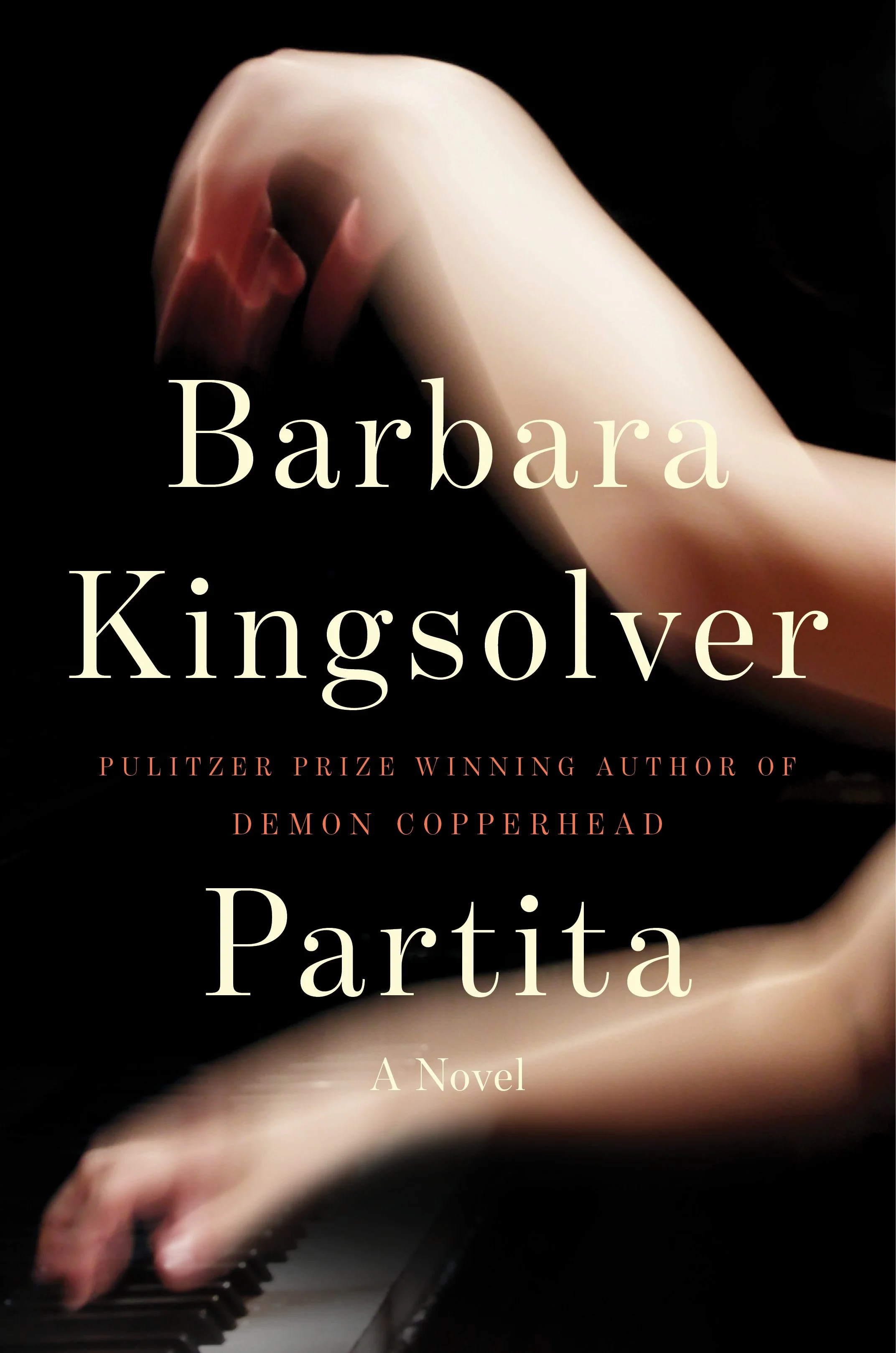
Have you ever wondered why tragedy and loss seems to rain down upon some, yet leave others untouched? No doubt some feel that they simply have made better choices, or are more favored by God, when they look upon the misfortunes of their fellow men. Perhaps there is some truth to that, or not. I’m reminded of a story about St Teresa of Avila: she got out of a carriage, and promptly face-planted into mud. Her remark was, “Lord, if this is the way you treat your friends, no wonder you have so few!” Livia Cable, nee Borhusz, is a piano prodigy with perfect pitch. Born in rural Tennessee, where no one understands her gift and what it will take to achieve her ambitions, she must overcome an abusive, dysfunctional mother, a withdrawn, uncommunicative father, and the loss of her beloved older brother to suicide, all to earn a place, with full scholarship at Indiana University School of Music. The psychological burdens she carries are great, increased by the socio-economic gap between her and her fellow classmates. Nonetheless, Livia works tirelessly to achieve the highest level of accomplishment in the first three years, even taking on Ravel’s notoriously impossible three-movement piano suite, Gaspard de la Nuit for her third year jury performance, receiving standing ovations from her professors.
It is now that she meets Sigurd, a man her deceased brother’s age, a working class typesetter who is passionately working for the Socialist Party, recruiting undergrads at her campus. He is the most beautiful man she has ever met, and although she was in a committed, contented relationship with a fellow student, in fact, engaged to be married, she throws over the relationship for a summer. She finds the greatest physical passion she has ever experienced in this relationship, has only ever felt this way about music to this point. She can barely tear herself away from him to work her piano accompanist gigs, income needed for the summer. It is as summer ends that her life crashes with a series of losses: Sigurd is called by the party to leave for Arizona to work with railroad unions, Livia suffers a devastating injury that effectively ends her pursuit of perfection, and a pregnancy is lost, with catastrophic consequences.
The novel runs upon two interwoven timelines—we follow Livia through her youth, leading up to college, her relationship with Sigurd, and the ensuing cataclysm. We also follow the present time, when a married Livia is teaching rural children and adults to play piano, while cleaning out her family home of the debris of a lifetime, upon her mother’s death. Her mother was a hoarder, her behavior becoming much more extreme when Livia’s father died. Livia is stuck trying to sort through senseless collecting, trying to understand the mind of her secretive mother. It is in the midst of various discoveries that she receives a call from Sigurd, now many years after the events of that disastrous summer, most of which she shouldered alone, never sharing with him or her husband, Charlie. We learn that surviving so much loss, moving forward in life, simply isn’t enough. It is now her time of reckoning, when all the pieces must be made to fit together, when true resolution and peace must be achieved, to give proper place and meaning to all that was lost, and all that was gained.
This is a novel of great depth, a many-layered work. It builds in the same way as a great piece of music, with rising tension, followed by resolution, leading to a second, somewhat different approach, building tautness and unease, until the climactic series of crashes. After the physical losses, come the psychological challenges, leaving the reader to wonder of Livia will yet again burn down everything she has worked so hard for, the life she has chosen and built from the ashes of her losses. You will ponder it, and keep having aha moments after completion. You may even want to read it a second time. It is the best novel I have read yet this year. Greatly recommended—a must-read.