Peck & Peck, by Bonnie Garmus
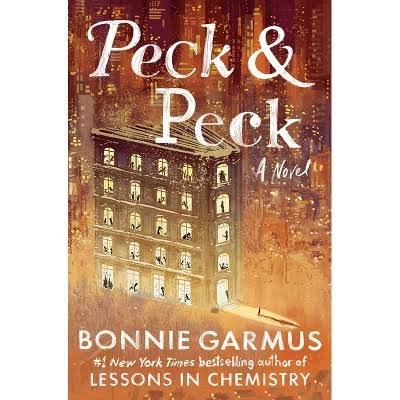
I eagerly awaited Garmus’s second novel, after the wonderful Lessons in Chemistry in 2022 (https://www.margueritereads.com/home/lessons-in-chemistry-by-bonnie-garmus?rq=lessons%20in%20chemistry) , which was made into a miniseries for AppleTV. Could lightning strike twice? Peck & Peck has a similar brand of sardonic humor as her first novel, although Garmus goes much more mapcap, even slapstick in Peck. Rather than concentrating on the development of a protagonist, as in Elizabeth Zott in Lessons, Garmus paints on a larger canvas, incorporating many characters at a sterling poetry journal, known as Peck & Peck, a family business traditionally run by generations of fraternal twins in the Peck family. While there is much to praise in this novel, there are also many weaknesses, so it does not achieve the tight composition of her first book.
The story centers on Batter Gray, his unusual name coming from a dog beloved by his mother, although her misunderstanding of the dog’s record at the shelter led to this name, the bane of his personal and professional life. His mother is a typeface designer, his father a history teacher at a community college. Both are low-paying humanities jobs, yet they are passionate about their pursuits. Batter has loved poetry since childhood, reading exclusively and compulsively. His parents are determined that his life will be easier financially than theirs, pushing him to pursue a career like medicine or the law. Struggling with jobs in retail and diners, he finally lands in his dream workplace—Peck & Peck, the most esteemed poetry quarterly in the world. Batter is determined to leverage his lowest position as copier boy to the highest job of editor, eventually, somehow.
Misunderstandings are key to all that ensues—characters seeing part of the picture, and inferring the rest, faultily, meanwhile acting, or failing to act, on misapprehensions, which are in turn misinterpreted by other characters. There are big problems at Peck & Peck, stemming from a financial scandal attributed to one twin, while the other twin takes over the publication, determined to remake Peck into a money-making bonanza, while destroying its carefully curated reputation as the preeminent poetry publication in the world. When this twin, Salton Peck, describes his strategy, it sounds curiously like what fiction publishing is going through currently:
“pulling an Emperor’s New Clothes, Beat….Taking Peck & Peck down, not letting it fail—financial failure is too easy—but by undressing the damn thing. Every issue I’ll by sifting in more of the lipstick pieces—the kind of crap that would make a kitten yack. That’s how you get smart people to accept awful stuff—by slowly introducing it into their intellectual diets while informing them of its brilliance. Before you know it, Peck & Peck will be parading around in its disgusting birthday suit and snobby academics everywhere will be falling all over themselves to defend its naked integrity!”
I have to think that Garmus might share my opinion that much of current published fiction is greatly diminished from the time of true classic, challenging, meaningful novels—yet I don’t think she meant for this book to serve as an antidote. You can see from this quote that Salton Peck is the core of much of this novel’s humor—a bombastic little man, constantly riffing on other’s weaknesses, foibles, and failures, imagined or otherwise, full of himself, and ever over-confident in his ability to master every situation. It is also clear that Batter will have to overcome his self-doubt and put it all on the line to save his much- admired publication.
While taking on a much more complicated plot with many moving parts, juggling a huge cast of characters, many of whom are not who they appear to be, Garmus succeeds in the main. I prefer the sardonic humor of Lessons, however—the zany scenes in Peck, while not too confusing, come frequently, and are not my taste in humor. We don’t get enough character development of Batter, just enough to propel the plot, which is Garmus’ intention. This is a more cartoonish novel, which is fine, I suppose. I just feel like Lessons in Chemistry set me up to think of Garmus as one kind of author—one who can inject some humor, but it serves the greater intention of plot and character. Peck feels mainly about the humor, with a side serving of character and theme. And that, for me, is a disappointment.
Read this one for the fun and laughs. I will be waiting for her next novel, which I hope will go back to character and message, Garmus’ true strengths.