
Skylark, by Paula McLain
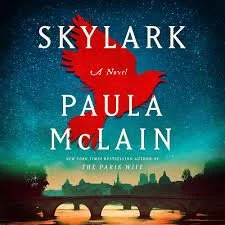
McLain’s new historical fiction novel tracks two stories, two timelines, in the same geographic location: Paris, France, both above and below ground. In 1664, we follow the story of Alouette Voland, daughter of a master dyer, and her lover, Etienne, a quarryman mining the limestone that will ultimately build Paris. In 1939, Kristof Larson is a psychiatrist at Sainte-Anne’s, a psychiatric hospital. He meets his friend, Alesander, an engineer, for nightly explorations of the tunnel system below Paris, slowly realizing that their underground knowledge will prove life-saving. The Nazis are soon to take over Paris, and Kristof will have the opportunity to help his neighbors, who have become like family.
Alouette struggles within a society in which women have few choices. While she would like to pursue the artistry of combining plants and other elements to produce beautiful dyes for fabric, the trade is closely regulated by the Guild, where individuals do not own their creations, and women are not permitted. Women who seek to find their own way in life are at great risk—the protection of a husband or father is necessary, as assertive women are often thought to have illnesses requiring involuntary commitment to primitive treatments, meant to break down their wills and induce compliance.
Kristof is experiencing the Nazi system for breaking down the will of a people, systematically removing freedoms, inducing deprivations, exercising authoritarian control. When he finally realizes what the Nazi’s destructive goal is, Kristof finally reaches his limit, his need to risk his life to save others.
The two storylines describe the beauty of human endeavor: the creative spirit of Alouette and Etienne; and the thoughtful interactions and activities of Kristof with his patients, attempting to heal trauma and provide healing encounters. Both protagonists experience the boot of authoritarian control over human pursuits, with an end to provide for more power for the few at the top, the crumbs for the masses below. In each story, we see the human spirit of resilience, resistance, striving to take power back.
McLain does a good job of depicting the underground Paris, a network that stretches across time, from earliest man, to the Romans, and marching forward to the present. It is a time machine, of sorts, where one can encounter all epochs within yards. McLain reminds me of Kristin Hannah, in her ability to describe place, the motives and emotions of her characters, and keep the pacing moving forward to conclusions that change those characters, completing their arcs. This is a well-told story, but not classic literature—it is entertaining, thoughtful to a degree, but not a book you will need to turn to again. Better than a Hallmark movie, but not standing the test of time.