
The Lost Book of Elizabeth Barton, by Jennifer N. Brown
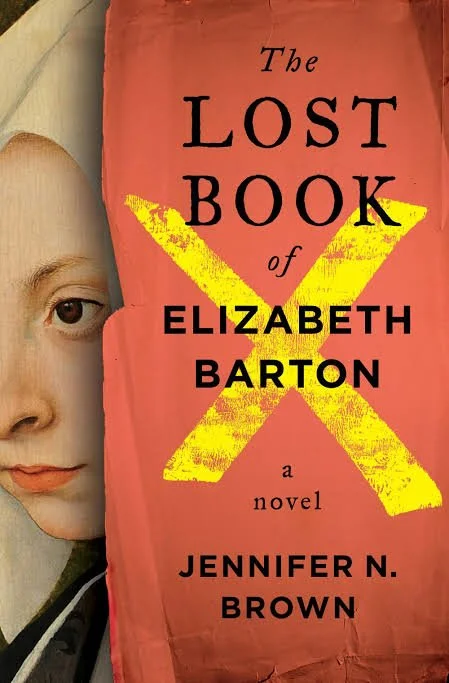
Jennifer N. Brown, a professor of medieval women’s literature, has turned an actual historical mystery into a fascinating story of psychological suspense and murder. Dr. Alison Sage has uncovered a book describing the visions of Elizabeth Barton, a farm girl-turned nun, taken in to a priory due to her fevered vision predicting the death of the farm owner’s son. A local monk, Fr. Bocking, believes Elizabeth’s experience to be genuine and of God, placing her in the priory for her protection and religious education, as well as to document her visions. This takes place in Tudor England, during the reign of Henry VIII, and Bocking clearly seeks to spin her narrative to support Rome, and combat Lutherans and others who would seek to sway the Church in England away from Catholicism. This is a tumultuous time in England, as Henry meets Anne Boleyn, and wishes to divorce Catherine of Aragon and marry Boleyn, requiring a break from Rome. As Elizabeth proclaims her visions, declaring Henry and Anne damned for their actions, predicting his death upon the marriage, Elizabeth is treading on very dangerous ground, placing the priory and all associated with her in peril.
By discovering the long-lost volume, Alison has become a bit of a rock star within her corner of academia. She is invited to an exclusive conference, a small gathering of academics at a manor house adjacent to the church and ruins of Barton’s priory. She cannot resist the opportunity to explore Barton’s environment, to see and touch where she lived, and perhaps answer questions the volume left unanswered. The weeklong conference becomes stranger as it progresses, with the author ramping up the psychological suspense, culminating in a murder, and a further attempted murder. Told in dual timelines, we follow Elizabeth’s saga, interspersed with Alison’s week in that locale.
Parallels naturally appear between Elizabeth and Alison. While some of Elizabeth’s visions seem real, many do not. Is she manipulated for Bocking’s ends, or does she comply with what he clearly wants declared for her own gain—the priory life is far better than farm work, earning her notoriety she would never otherwise experience. She eats well, is exempt from endless physical labor, and is called upon to meet and speak with the King, and other important personages. Elizabeth’s motives are suspect. For Alison, we see how men hold greater power in academia, minimizing her discovery as good luck, not the result of painstaking work combined with educated research effort. The sad fact to be revealed is how she is being used by these aging academics, not included for her effort and talent, but what they can profit from her work.
Brown seized upon this Tudor mystery of the missing book, the simple farm girl-turned seer who gets in over her head during a dangerous time in England, and uses it to create a page-turning mystery-suspense novel. Reads like a book worthy of the beach, or any vacation spot you wish to enjoy a good story. Recommended.