
Land, by Maggie O'Farrell
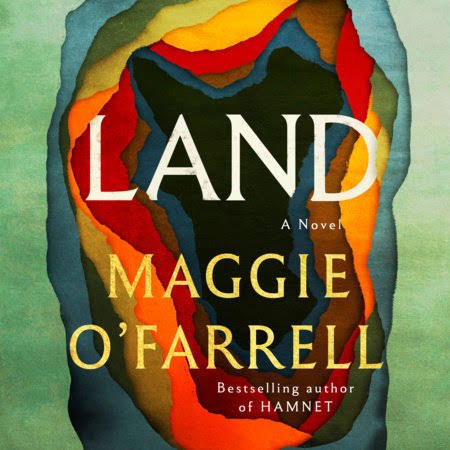
This is my third O’Farrell novel, and probably the most emotionally powerful. Check out my reviews for Hamnet (https://www.margueritereads.com/home/hamnet-a-novel-of-the-plague-by-maggie-ofarrell?rq=o%27farrell) and The Marriage Portrait (https://www.margueritereads.com/home/the-marriage-portrait-by-maggie-ofarrell?rq=o%27farrell) . Land is written for those with Irish heritage, those who have a small fire within that calls out to the homeland, the land of origin.
It is the time towards the end of the Great Hunger, when potato blight, colonial domination, and disease caused the death of a million Irish citizens, leading to a mass migration, and an overall decline in population of 25%. O’Farrell tells the story through Tomas and Phina, both survivors who have lost their entire families, hanging on to life at a workhouse. We see all the empty cottages through their eyes, the grim workhouse conditions, and how young people were farmed out as cheap labor to the wealthy big houses and farms, where conditions were poor, and people were worked to death by their overlords. They were often treated as indentured workers at best, slaves at worst, inferior people by the colonial English, forced to pay rents for their own land. It is no wonder that this led to uprisings and a free Ireland movement later.
The timeline is from when Tomas and Phina meet at the workhouse, when Tomas develops a plan to free them both; ending when the parents have died, and their children are living their adult lives. By attaching himself to a Redcoat surveying team, Tomas develops valuable skills, learning to be an independent surveyor, then goes back to liberate Phina. The story follows their growing family, with a few important pivot points in plot that change the fate and direction of their family. During a surveying trip, Tomas suffers a crisis of faith and identity: by creating maps for the English, he is helping the colonizers, and losing the true history, language, and ownership of the Irish land, creating a new record of English ownership. This he cannot bear, and nearly loses his mind, if not his life. Eight-year-old son Liam witnesses his break, and somehow manages to get his father home, where Phina can help heal him. We later see that this trauma has serious consequences for Liam. Tomas moves the family from their cramped apartment in Dublin to the rural peninsula where his breakdown happened, as the family rebuild an old, abandoned cottage, and make a home.
Along the way, O’Farrell gives a history of previous occupants of the land, going back thousands of years. She masterfully weaves past neatly into the family’s present. While a tight, loving family, there are miscommunications, misunderstandings, and chance pivotal moments that lead to life-changing decisions. Liam, his sisters Enda and Rose, and his mute brother, Eugene, each find their way, loving each other and the land that has helped shape their lives. This novel is a beautiful story, and will satisfy your longing for a solid, heartfelt tale of our beautiful country of origin, Ireland, a place that calls out to our souls, our DNA.