
Whistler, by Ann Patchett
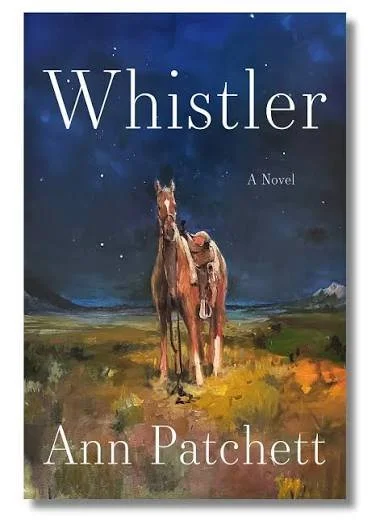
I’m becoming something of an Ann Patchett fan. She sort of snuck into my affections, first with The Dutch House (https://www.margueritereads.com/home/the-dutch-house-by-ann-patchett?rq=patchett), then Tom Lake (https://www.margueritereads.com/home/tom-lake-by-ann-patchett?rq=patchett); then I listened to the audiobook of Bel Canto this summer while working in my vegetable garden, and it was an amazing story. I’ve been on my library’s waiting list for Whistler all summer, until my number came up this week. I devoured the book, so now I need to recollect my impressions.
Patchett dedicates her book to Jim Fox, who was a dear, life-long friend who assisted her through a difficult situation. When he died, she took the love and grief and poured it upon the relationship of Daphne and Eddie in this book. Whistler feels like an exploration of Patchett’s understanding of love and loss, the ways people cope, or fail to. Daphne and her younger sister Leda are the products of their parents’ marriage, Buddy and Abigail, who were really not meant for parenthood. After their marriage ended, Abigail marries a fun work friend, Eddie, who parents the girls for the one year of that marriage. Abigail later meets and marries Lukas, an author she promotes through her job as a publicist for his publisher, with whom she has two sons. Of all these adults, it is Daphne’s year with Eddie when she feels most loved, heard, and seen; thus it is life-altering when her mother inexplicably removes him from her life. The pivotal event that led to the breakup is what Daphne finally thinks through and comes to understand, and forces her mother to do the same.
At the center of this story frame is the night of Leda’s emergency appendectomy, when Abigail stays at the hospital with her younger daughter, entrusting Eddie to pick up Daphne at school, drive her home, and care for her that evening. Eddie has a wonderful relationship with Daphne, true kindred spirits who love good books, and each have an ember of a desire to write novels. Although it is winter, he drives Daphne to a hill-top raspberry farm, where the stars of the night sky are breath-taking. Unfortunately, driving with headlights off to admire the sky, he goes off the track and the side of the hill. The recovery and aftermath are slowly revealed throughout the novel, and become both self-discovery for Daphne, as well as a chance to understand what Eddie and Abigail were thinking throughout.
We come to understand, through Daphne’s life choices, the ways she dealt with her mother’s lack of parenting, and her observations of her family, ways in which people choose to love and prioritize themselves and others, and how that impacts those around them. Patchett tries to answer the question of what happens to all the love we feel for someone when they die: “Grief is the price we pay for love.” Through Daphne, we come to understand, and hopefully accept, the limitations of those we love to love us in return, and why we choose certain people to love in our own lives. Patchett’s art as a writer, through the novels I have read so far, is to create an interesting, arresting situation, then follow a protagonist through that event or memory, investigating, peeling back layers, attempting to understand its greater, defining meanings. Love, as the core human experience, shaped by human weaknesses and strengths, is the essential theme for Patchett. With superior storytelling ability, and the willingness to gaze calmly on the human situation, she makes a good scout and emotionally intelligent leader. Highly recommended.