
The Things We Never Say, by Elizabeth Strout
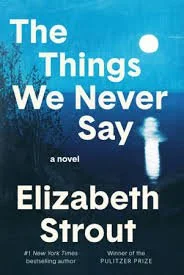
I am an unabashed fan of Elizabeth Strout. I feel deep kinship with Lucy Barton (https://www.margueritereads.com/home/my-name-is-lucy-barton-and-oh-william-by-elizabeth-strout?rq=elizabeth%20strout), (https://www.margueritereads.com/home/lucy-by-the-sea-by-elizabeth-strout?rq=elizabeth%20strout), and Olive Kitteridge (https://www.margueritereads.com/home/olive-kitteridge?rq=elizabeth%20strout), (https://www.margueritereads.com/home/tell-me-everything-by-elizabeth-strout?rq=elizabeth%20strout). Strout has a deceptively simple style of writing, but manages to unveil truths of human nature and interpersonal relationships through that beguiling simplicity. So imagine my excitement when I learned she had a new novel coming out this year!
It is a treat, since we are to meet a new group of characters. I will work hard not to reveal too much, since the joy of this novel is to take the emotional journey with our protagonist. We return to a school setting (as with Olive Kitteridge), where we meet Artie Dam, high school history teacher, beloved by his students and fellow teachers for his emotional sensitivity, support, fairness, and general jovial disposition. Artie doesn’t take himself too seriously, but requires respectful behavior of the students for one another. He is married to Evie, and their son Rob is an MIT alum IT specialist, married to Francesca, a concert pianist frequently on tour in Europe. Artie is in his late fifties, approaching retirement, and is world weary, suffering a depression he cannot quite understand.
Artie is quietly grappling with big questions, and wonders why we all engage in such small, meaningless talk, why we habitually lie about our lives to one another. He wonders if everyone is walking around feeling as isolated and lonely as he is, since no one will mention their deep hurts, circumstances and burdens we all carry, while steadfastly putting up a phony face in our daily grind. As he ebbs lower than ever, a strange, unexpected event occurs, followed by a very strange revelation—these two incidents turn his world upside down, changing nearly everything for Artie. His relationships must change in light of this, forcing him to reconsider everything he took for granted in life.
Here is an expression of Artie’s thoughts on what we never express,
“So blind we humans are—so blind. To each other and to ourselves, moving through life as though through shadows, putting out a hand in the dark and thinking we have touched someone. And maybe we have, Artie did with Rhonda Lazarre that day. But mostly we travel through life unsighted, grasping only the smallest details of one another’s selves, including our own. Thinking all the while that we can see.”
Later, towards the novel’s close, Artie has this further insight, regarding his burning question as to why we don’t say real things,
“And now he knew why. Because to say anything real was to say things that nobody wanted to know. Or if they wanted to know, they would not care in the right way. Or even understand.
It was a private thing, to be alive. He understood this now.”
And a final insight,
“In his study of history, he had learned about the leaders, and the various groups involved, but he had somehow missed this fact about every single person: that they held within themselves a vast, unknowable universe.”
So to grow up is to handle being unknowable, even to those closest to you; yet at the same time, to have the courage to share what you can, accept the insufficient, well-meaning responses from others, and be open to listening when they share with you. That’s what Artie brought to those he touched in life. This may well be Strout’s best book yet. Simple and profound—a better novel this year would be hard to find. Highly recommended.